Keep the reference clear
Identify the revision or released definition behind an exchange so the recipient knows what the information describes.

Give collaborators the product information their work needs. Keep access tied to the person, the record and the action—not simply the ability to sign in.
Explore the protection layersIP protection for digital assets is the deliberate control of who can find, use and change the engineering information that gives a product its value. In PLM, that information includes design files and the relationships, specifications and decisions that make those files meaningful.
The aim is to support a legitimate engineering task while limiting unnecessary exposure. A supplier reviewing a released drawing may need its revision and material specification, but not the wider development history or every model in the assembly.
Explore product data management
Start with the information to be shared, the people receiving it and the operations their task requires. Translate that scope into configured identity, permission and clearance rules; then test representative access before inviting a wider audience.

Product information moves between engineering, manufacturing and external partners. A data-centric approach starts with the authoritative record and its sensitivity, rather than assuming that every person inside a network needs the same access.
PLM can provide the product reference for these exchanges. When connecting ERP, manufacturing or supplier environments, define which records cross each boundary, which system owns the receiving copy and how changes are communicated. Protection depends on the configured interface and receiving environment as well as the source controls.
Identify the revision or released definition behind an exchange so the recipient knows what the information describes.
Select the records and representation needed for the receiving task. A visualization and a complete native model can reveal different levels of detail.
Define retention, refresh and onward-sharing responsibilities. Revoking access in PLM does not establish that a previously delivered copy has been recalled.
Use the controls together around a real collaboration task. The capability groups below distinguish the access decision, the information delivered and the activity available for investigation; they are not interchangeable layers.
Object permissions and clearance define the working boundary.
Map participants, object types and lifecycle states to allowed operations. Read, Download, Modify and Modify Content have different purposes, and an operation may depend on several permissions.
Attach configured clearance conditions to sensitive objects. A participant needs the appropriate permission and clearance for every applicable label; identity alone is insufficient.
Where enabled, an agreement can supply label clearance to specified participants for applicable objects or contexts within defined dates. It does not remove the underlying permission requirements.
Choose records, representations and collaboration scope deliberately.
Manage part references, history and configured release notifications around the participants who need them. Keep the supplier’s working scope distinct from the full internal product definition.
Select relevant design information and review the detail present in a shared representation. Available publishing, simplification and data-removal options depend on the applications, formats and configuration.
Associate an issue with affected parts or assemblies so the responsible team can investigate it in product context. An issue record does not by itself approve a change or establish a security incident response.
Review evidence and operating responsibilities alongside configuration.
Configured auditing can record security-related activity for investigation. Confirm which events are collected, who reviews them and the retention needs of your environment.
Combine authenticated participation with maintained groups, reviewed configuration and a defined administration process. Product access rules complement the wider security practices of the organization.
Confirm release, applications, licensing and enabled security-label, agreement, publishing and audit configuration for the proposed environment. No single control guarantees protection after information leaves the managed system.
Windchill provides the managed product-data foundation; Windchill Navigate extends selected tasks to a wider audience. Choose the access experience around the work, then validate its permissions and information scope in the intended environment.
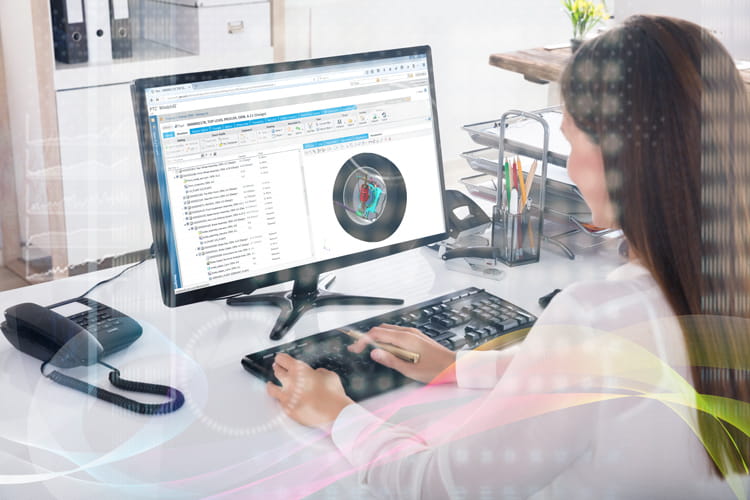
 Windchill
Bring engineering records, revisions and relationships into a governed PLM environment. Administrators can connect access rules to product objects, participant groups and lifecycle context, with additional label and agreement controls where configured.
Explore Windchill Windchill Navigate
Offer role- and task-based apps for people who need to view or contribute to selected product information. Evaluate the task, content and underlying access together; a simpler interface does not grant unrestricted access to the source records.
Explore Windchill NavigateBring one representative record, an internal role and an external participant. Use that small scope to discuss the right product experience and access responsibilities.
Discuss your product-data accessInformation sensitivity depends on the product and the collaboration task. These industry situations help define the records, audience and access boundary for an initial discussion.

A design partner may need a board interface or enclosure reference without receiving the complete development record. Select the representation and related information deliberately.
What does the partner need to review without exposing unrelated design knowledge?
A program review can involve participants from several organizations. Identify the configuration, participant groups and information classifications that apply to the shared records.
Which program information belongs within this participant’s task?

A device collaboration can involve design, quality and external specialist records. Identify the information owner and intended operation for each audience.
Who approves access to each part of the device review record?
Separate identity, allowed operations and information handling when defining your scope.
No. Authentication identifies the participant. Access to an object and the operations available on it depend on the configured controls and any applicable security-label clearance.
No. Clearance and permissions are separate requirements. A participant cleared for the labels still needs the appropriate access-control permissions for the intended action.
No. An active agreement supplies label clearance within its applicable scope, conditions and dates. It does not remove the need for the underlying permissions.
Do not assume so. Define how information is handled after delivery, including the receiving environment and any separately configured protections. Access changes within PLM are not evidence that an already-delivered copy has been removed.
Bring a real collaboration task, representative records, intended participant groups and the owners of access decisions. Include the actions participants need to perform and any limits on the information being shared.
Bring one collaboration request and the information it involves.
TriStar can help connect the engineering purpose with an appropriate access and configuration discussion.